
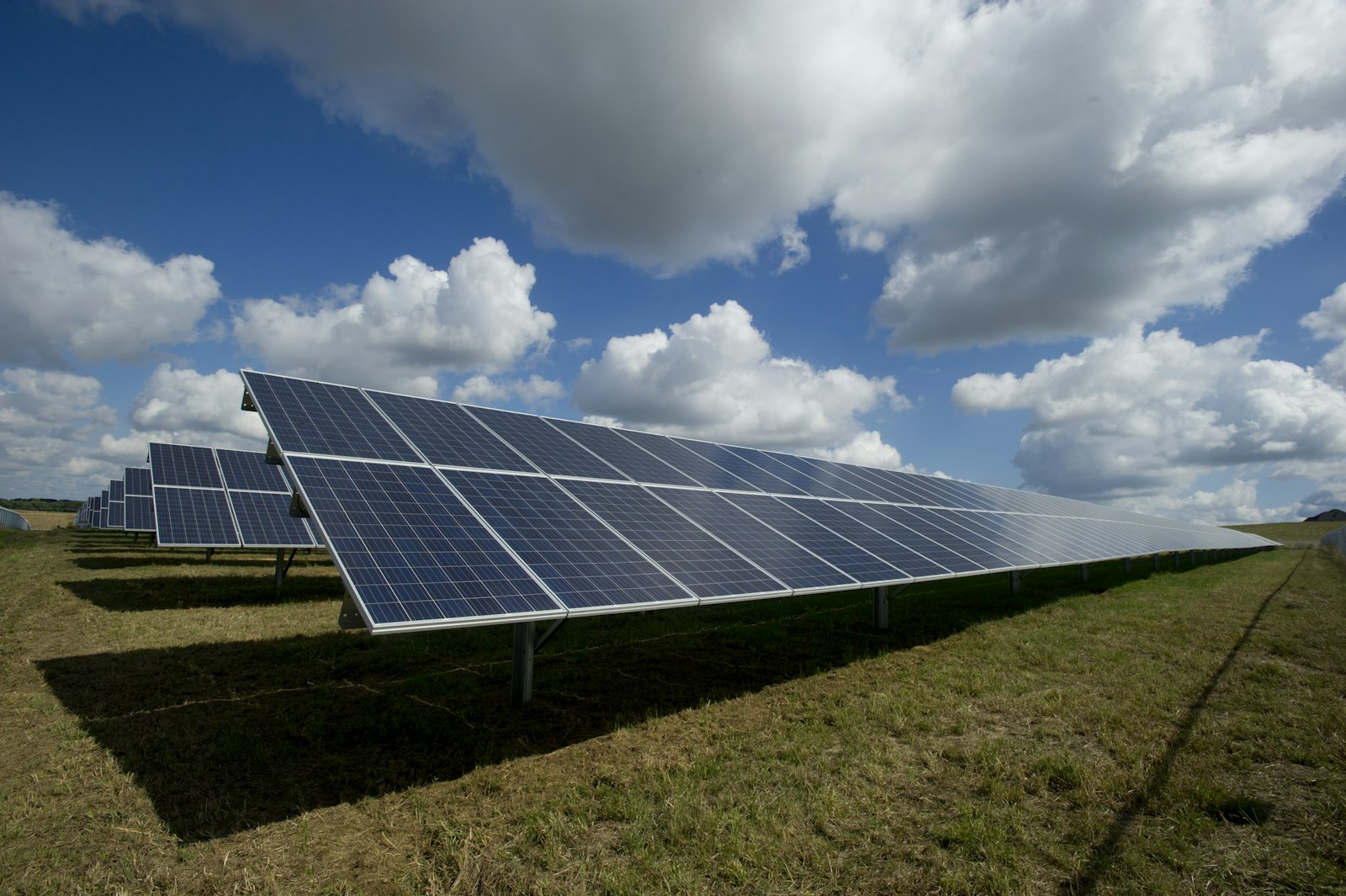
OXFORD, England — In a significant advancement for renewable energy, researchers at Oxford University and the National Renewable Energy Laboratory have successfully developed perovskite solar cells that achieve 30% energy conversion efficiency, a breakthrough that could accelerate the global transition away from fossil fuels.
The new cells, which combine perovskite materials with traditional silicon, represent a major leap forward from the current commercial standard of 20-22% efficiency. More importantly, the manufacturing process is simpler and less expensive than conventional photovoltaic production, potentially reducing costs by 40% within the next five years.
A Game-Changing Technology
"What makes this breakthrough particularly significant is not just the efficiency gain, but the scalability," said Dr. Henry Chen, lead researcher on the project. "We've demonstrated that these cells can be manufactured using standard industrial equipment, which means companies can transition to this technology without massive capital investments."
The research, published in the journal Nature Energy, shows that the new perovskite-silicon tandem cells maintain their efficiency even after 1,000 hours of continuous operation under standard testing conditions. This durability was a major hurdle that previous generations of perovskite cells failed to overcome.
Market Implications
The implications for the solar industry are substantial. Currently, solar panels cost between $0.70 and $1.00 per watt. If manufacturing costs can be reduced by 40%, the price could fall to $0.42 to $0.60 per watt, making solar energy competitive with natural gas in many regions without subsidies.
"This technology could be commercialized within two to three years," said Maria Santos, chief technology officer at SunPower Corporation. "We're already in discussions with the research team about licensing the technology. The potential market impact is enormous."
Global Energy Transition
The breakthrough comes at a critical moment in the global energy transition. According to the International Energy Agency, solar power accounted for 4% of global electricity generation in 2024, up from less than 1% a decade ago. Lower costs could accelerate this growth significantly.
"If we can reduce the cost of solar panels by 40%, we could see solar power reaching 15-20% of global electricity generation by 2035," said Dr. Fatih Birol, executive director of the IEA. "This research is exactly the kind of innovation we need to meet our climate goals."
The research team is now working on scaling up production to demonstrate that the technology can be manufactured at commercial volumes. Several major solar manufacturers have already expressed interest in collaborating on pilot production facilities.
Related Articles
Global Leaders Convene on Economic Recovery
Jan 15, 2026
Tech Companies Unite on AI Safety Standards
Jan 11, 2026
More Business News
Latest Updates
About the Author
Dr. Elena Rodriguez is the Energy & Technology Correspondent for Global Insight Times. She holds a Ph.D. in Materials Science and has covered renewable energy developments for over 12 years.
Follow ElenaKey Facts
- Efficiency: 30% energy conversion rate
- Cost Reduction: 40% potential savings
- Timeline: 2-3 years to commercialization
- Durability: 1,000+ hours tested